

As a parent, your child's health is your deepest concern. When excessive tonsil hypertrophy causes a child to snore, feel breathless, have restless sleep, or even affect their growth and development, surgery often becomes a necessary option. However, while traditional total tonsillectomy solves the problem, it also removes this important immune organ, inevitably making you worry whether your child's immune defense will be weakened as a result.
Now, advances in medicine offer you a more scientific and humanized choice — partial tonsillectomy. It precisely removes the diseased tissue while preserving the healthy glands, allowing the child to get rid of the illness without compromising their immune function, recover faster, and suffer less!
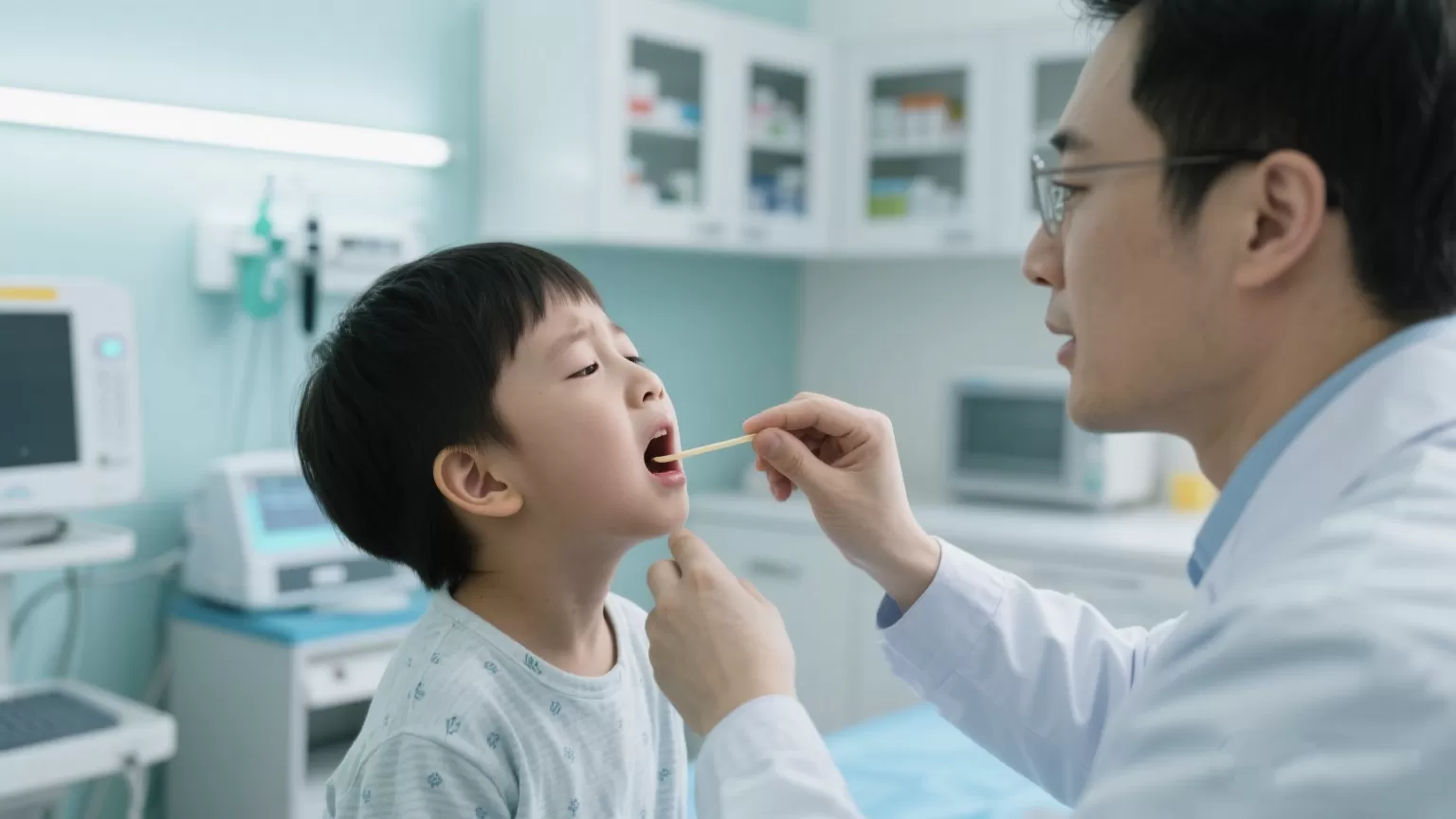
The tonsils are the "first immune defense line" of a child's respiratory and digestive tracts, and are particularly crucial during the child's growth stage. They can secrete immunoglobulins to resist the invasion of pathogens.
Partial tonsillectomy precisely removes the enlarged or diseased tonsil tissue while preserving the healthy part of the tonsils. This means that after the operation, the child still has this important immune barrier, which continues to play a defensive role and reduces the risk of long-term respiratory infections.
Seeing children get sick less often and have strong resistance is the greatest comfort for parents. Partial resection maximally protects the child's natural "health guard".
• Mild pain: The wound is small, and the surgical trauma is much less than that of total resection. Most children can speak and drink a small amount of water on the day after surgery, with mild pain that lasts for a short time (usually significantly relieved in 1-3 days).
• Quick recovery of diet: Say goodbye to the suffering of eating liquid food for weeks! Usually, children can try soft food or even food close to a normal diet on the day after surgery, allowing them to have a more free diet, get timely nutrition supplementation, and stay in a more stable mood.
• Quick recovery of activities: Children can resume daily activities about 3 days after surgery and usually return to school within a week, which greatly reduces the impact on their study and social life.
The pressure of post-operative care drops sharply! There's no need to worry day and night that the child is in so much pain that they can't eat or sleep, and no need to take a long leave to take care of them at home. The child suffers less, and parents are more at ease.
One of the most feared complications of traditional total resection by parents is post-operative bleeding (with an incidence rate of about 2%-5%), which may occur a few hours after surgery or even when the scab falls off 1-2 weeks later, and sometimes requires emergency treatment or even a second surgery.
Beijing Jingdu Children's Hospital adopts endoscopic low-temperature plasma minimally invasive technology, and the risk of bleeding in partial tonsillectomy is extremely low (<0.1%). The operation is performed within the tonsil capsule, effectively avoiding major blood vessels, and basically ensuring no bleeding after surgery, allowing parents and children to sleep peacefully after the operation.
"Post-operative bleeding" is the biggest worry for parents. Partial tonsillectomy almost eliminates this worry, and the leap in safety is one of the core reasons for choosing it.
Compared with the extensive stripping of throat tissues in total resection, partial resection has more limited trauma, and the post-operative reactions such as swelling and pain are milder.
Seeing that the child is in a relatively stable state after surgery, cries less, can laugh and eat faster, parents' anxiety and distress are naturally greatly reduced.
Aspects parents care most about | Partial tonsillectomy | Total tonsillectomy |
Preservation of immune function | ✅ Preserve healthy tissues, continuous immune defense | ❌ Completely removed, losing local immune function of tonsils |
Degree and duration of post-operative pain | ⭐ Mild pain, usually relieved in 1-3 days | ⚠ Moderate to severe pain, usually lasting about 2 weeks |
Post-operative diet requirements | Can try soft food / normal diet the next day after surgery | Need strict liquid / soft food for more than 2 weeks |
Risk of post-operative bleeding | Extremely low (<0.1%) | ❗ Relatively high (2%-5%) |
Recovery of post-operative activities | Can resume daily activities 3 days after surgery, return to school within 1 week | ⏸ Need to rest for 1-2 weeks, avoid strenuous exercise |
Possibility of recurrence | 0.1%-3% (mainly obstructive symptoms, regular follow-up is required) | Basically no recurrence |
• Children with snoring and sleep apnea (OSAHS) caused by tonsil hypertrophy (this is the main indication).
• Children with localized tonsil cysts or benign lesions.
• Children without a history of repeated, severe suppurative tonsillitis (usually referring to less than 3 episodes per year).
• Children with recurrent suppurative tonsillitis (usually referring to ≥4 episodes per year, or multiple episodes affecting life).
• Children who have had complications such as rheumatic fever, nephritis, and psoriasis caused by streptococcal infection.
• Doctors suspect that the tonsils may have malignant lesions and need to be completely removed for pathological examination.
Partial tonsillectomy represents the progressive concept in the field of children's tonsil surgery — on the premise of effectively solving diseases (especially obstructive problems), it minimizes surgical trauma, protects the child's precious immune function, and significantly improves surgical safety and comfort. It allows children to laugh, eat, and return to normal life and study faster after surgery.
Is your child's specific situation suitable? Which surgical method is optimal?
Be sure to consult a professional otolaryngologist! Doctors will conduct a comprehensive assessment based on the child's medical history, tonsil condition, age, and your core concerns (such as whether you value immune protection more, whether you can accept a slightly higher recurrence risk in exchange for less pain and risk), and formulate the most appropriate personalized treatment plan for you and your child.
Choose partial tonsillectomy, and in a more precise and safe way, remove the pain and troubles for your child, safeguard the foundation of health, and embrace a carefree growth!

 EN
EN
 CN
CN